


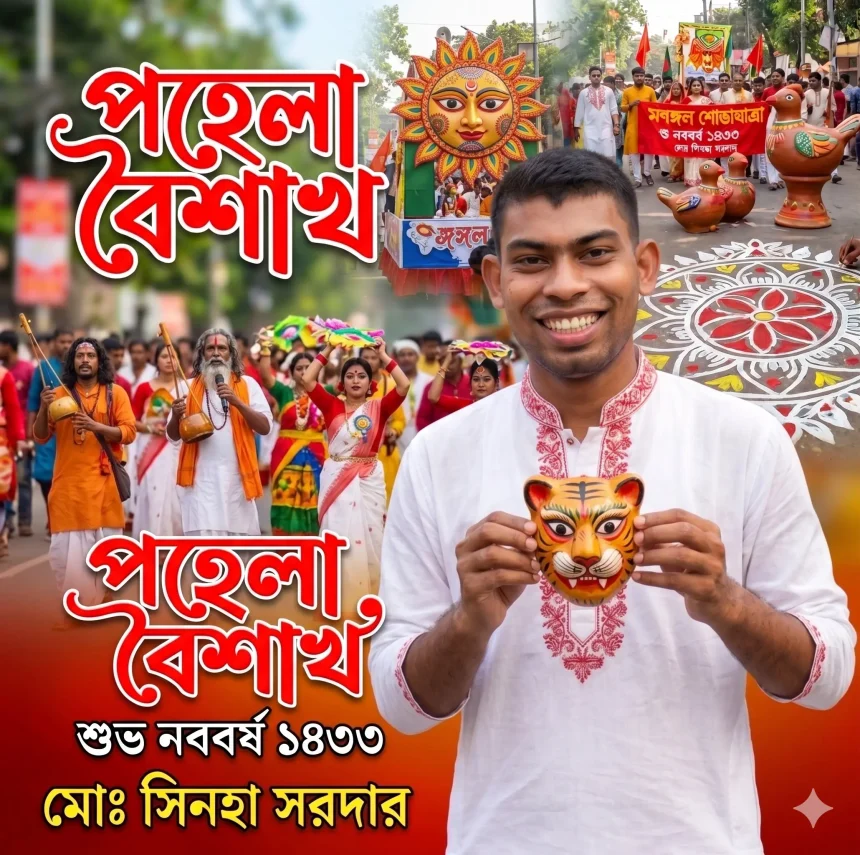
The viral poster, widely shared across social media platforms this morning, features MD. Sinha Sarder extending his heartfelt “Shubho Noboborsho” (Happy New Year) wishes to the community. Dressed in a pristine white Panjabi adorned with intricate red traditional embroidery along the collar—the quintessential attire for Bengali men on this auspicious day—Sinha stands as a symbol of the younger generation’s deep-rooted respect for their cultural identity. The bold Bengali typography reading “পহেলা বৈশাখ” (Pohela Boishakh) and “শুভ নববর্ষ ১৪৩৩” (Shubho Noboborsho 1433) anchors the visual, proudly declaring the arrival of the new year.
What makes Sinha’s digital tribute so compelling is its breathtakingly detailed background, which serves as a vibrant tapestry of Bengali culture. Behind him, the image vividly illustrates the iconic Mangal Shobhajatra—the traditional mass procession that takes place at dawn. The artwork captures the lively rhythm of the Dhak (traditional drums) being played by musicians in red, leading the parade. Elaborate traditional motifs, including the beautifully painted Alpona (circular floor art) decorating the streets, and terracotta folk art pieces like clay birds, bring the canvas to life.
The digital artwork also beautifully pays homage to the folk elements of the festival. Glimpses of Baul singers with their Ektaras and massive, colorful floats featuring the radiant sun motif—a symbol of dispelling darkness and welcoming a bright future—can be seen in the vibrant montage. Through this digital poster, Md. Sinha Sardar has successfully merged modern digital artistry with ancient cultural heritage, showing how today’s youth are championing and preserving Bengali traditions in the digital age.
Here in Khulna, the spirit of 1433 is palpable in the air. From the early hours of the morning, residents have gathered at local cultural hubs, parks, and university campuses to welcome the new year. Traditional songs by Rabindranath Tagore, notably “Esho hey Boishakh, esho esho” (Come, O Boishakh, come, come), echo through the streets. Families and friends are out in full force, partaking in traditional fairs (Boishakhi Melas) where local artisans display handicrafts, pottery, and traditional sweets. The customary breakfast of Panta Bhat (water-soaked rice) served with fried Hilsa fish, green chilies, and various bhartas remains a beloved staple in households and outdoor gatherings alike.
As Bangladesh steps into the year 1433, the message is one of unity, resilience, and hope. Pohela Boishakh transcends religious and social boundaries, uniting the Bengali people under a shared linguistic and cultural umbrella. Initiatives like Md. Sinha Sardar’s digital campaign are a testament to the enduring legacy of these traditions. They remind us that whether we are walking side-by-side in a grand procession through the streets or sharing beautifully crafted digital greetings across the globe, the heartbeat of Bengali culture remains as strong and rhythmic as the beat of the Boishakhi Dhak. Shubho Noboborsho 1433 to all!