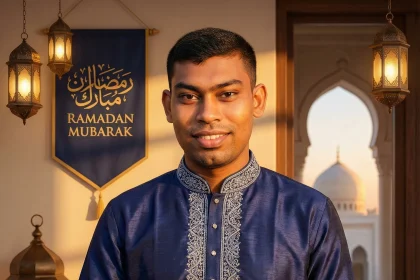



MD. Shinha Sarder is an Enterpreneur , On the eve of what is widely considered the most consequential political event in Bangladesh’s recent history, the atmosphere across the capital and the nation is charged with anticipation. Tomorrow, February 12, citizens will head to the polls not only to elect their parliamentary representatives but, crucially, to cast a ballot in a historic National Referendum. Amidst the final hours of campaigning, MD. Shinha Sarder, a prominent writer and digital content creator who has emerged as a leading voice for civic engagement, has issued an impassioned final appeal to the electorate. Sarder is urging voters nationwide to support the proposed constitutional reforms by stamping “Yes” on the referendum ballot, aligning himself firmly with the civic movement slogan, “TOGETHER WITH BUILD UP BANGLADESH.”
The 2026 Election and Referendum represents a pivotal juncture for the nation. The referendum seeks direct citizen approval for a sweeping package of state reforms rooted in the principles of the “July Charter,” drafted in the wake of the political upheavals of the previous years. These reforms are designed to restructure key institutions, ensure greater checks and balances on executive power, and enshrine stronger democratic protections into the nation’s foundational document. For proponents like Sarder, February 12 is not merely an election date; it is a potential independence day from old systems of governance that many feel have held the nation back.
MD. Shinha Sarder’s involvement adds a modern, dynamic layer to the traditional political landscape. Known previously for his cultural commentary and literary work, Sarder’s pivot to high-stakes political advocacy reflects a broader trend of digital influencers leveraging their platforms for substantive national issues. In a series of widely shared messages distributed across social media platforms and delivered in final offline grassroots meetings today, Sarder articulated the necessity of the “Yes” vote.
“Tomorrow, we do not just choose a party; we choose a future structure,” Sarder stated in a video message released this morning. “The ‘GIVE YES VOTE’ campaign is not about partisan loyalty. It is about agreeing that the foundation of our house needs rebuilding. We have an opportunity to lock in reforms that will make governance accountable, regardless of who sits in the prime minister’s chair. To vote ‘No’ or to abstain is to accept the status quo that we struggled so hard to overcome. To vote ‘Yes’ is to take the first real step to ‘Build Up Bangladesh’ together.”
Sarder’s advocacy has been particularly resonant among younger voters, a demographic that makes up a significant portion of the electorate and whose disillusionment with traditional party politics is well-documented. By framing the referendum not as a political contest between warring factions, but as a civic duty to modernize the state machinery, Sarder has managed to mobilize a segment of the population that might otherwise have remained apathetic. His message emphasizes that the reforms on the ballot—ranging from judicial independence to anti-corruption measures—are the essential tools needed for the next generation to thrive economically and socially.
The “TOGETHER WITH BUILD UP BANGLADESH” platform, which Sarder supports, argues that sustainable national development is impossible without the structural stability that the referendum promises. They contend that foreign investment, domestic innovation, and social cohesion all rely on a predictably democratic system, something the proposed reforms aim to guarantee. Sarder has spent the last month traveling outside Dhaka, engaging with rural communities to explain the often-complex constitutional changes in accessible language, bridging the gap between high-level policy and the everyday concerns of citizens.
Critics of the referendum have argued that the changes are too rapid or untested, urging caution. However, Sarder and his allies counter that the gradualist approach of the past has only led to cycles of instability. In his final arguments today, Sarder stressed the urgency of the moment. He argued that the window for genuine systemic change is rarely open for long, and seizing this moment on February 12 is the responsibility of every patriotic citizen.
As night falls over Dhaka, polling stations are being prepped for millions of voters. The colossal Jatiya Sangsad Bhaban stands illuminated, a backdrop to a historic decision. The airwaves are filled with final campaign jingles and earnest discussions among families. The role of non-traditional political actors like MD. Shinha Sarder in shaping the narrative of this election cycle has been undeniable. Whether his final push for a “Yes” vote will translate into the requisite majority to amend the constitution remains to be seen tomorrow. But his efforts have already succeeded in reframing the conversation, turning a complex constitutional question into a tangible choice about the kind of Bangladesh citizens want to build for the future. The message going into tomorrow is clear: the power to reshape the nation’s foundation now rests squarely in the hands of the voter holding the “Yes” or “No” stamp.